In recent years, smart homes have become increasingly popular. Also known as intelligent residences, smart homes integrate automation control, computer networks, and communication technologies into a networked, intelligent home management system. Through a mobile app, users can control all connected appliances within the household.
A typical smart home system comprises eight subsystems, all designed to provide a safe, convenient, comfortable, artistic, energy-efficient, and environmentally friendly living environment. Achieving this requires not only user-friendly and intelligent software but also reliable hardware to ensure the smooth operation of the entire system.
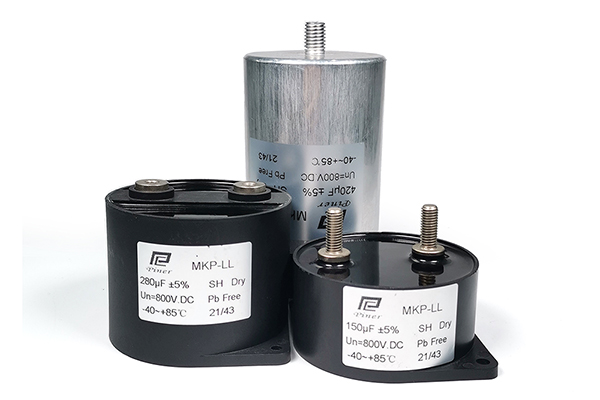
DC-link capacitors are critical energy storage components in power electronics systems, playing an irreplaceable role in modern industrial applications. These capacitors are primarily used for DC-side filtering and energy buffering, with core functions including stabilizing DC bus voltage, suppressing ripple interference, and improving system power density.
As the electric vehicle (EV) industry moves toward higher-voltage architectures, the 800V platform has become a mainstream trend. This technological shift significantly increases charging power and shortens charging time, while also posing unprecedented challenges to core electronic components. Among these, the DC‑Link capacitor (DC‑support capacitor) – a critical energy‑storage component that connects the traction battery to the traction inverter, stabilizes the DC bus voltage, and absorbs high‑frequency ripple currents – has become a focal point for technology upgrades.
Although DC link capacitors and AC capacitors both belong to the capacitor family, they differ fundamentally in design philosophy, manufacturing processes, and application scenarios. Understanding these differences is crucial for proper selection and use.
We use cookies to offer you a better browsing experience, analyze site traffic and personalize content. By using this site, you agree to our use of cookies. Privacy Policy



 30 2026-09
  30 2026-09
  24 2026-09
  18 2026-09
  18 2026-09