Language


In the design and manufacturing of modern electronic devices, have you ever encountered situations where equipment suddenly freezes during testing, data transmission experiences frequent errors, or audio equipment emits an irritating "buzzing" sound? These seemingly tricky problems are often related to an invisible threat: electromagnetic interference (EMI).
To combat EMI, one component plays the role of a "gatekeeper" -- the common mode choke filter. This article will help you understand the functions of this key component and share practical insights.
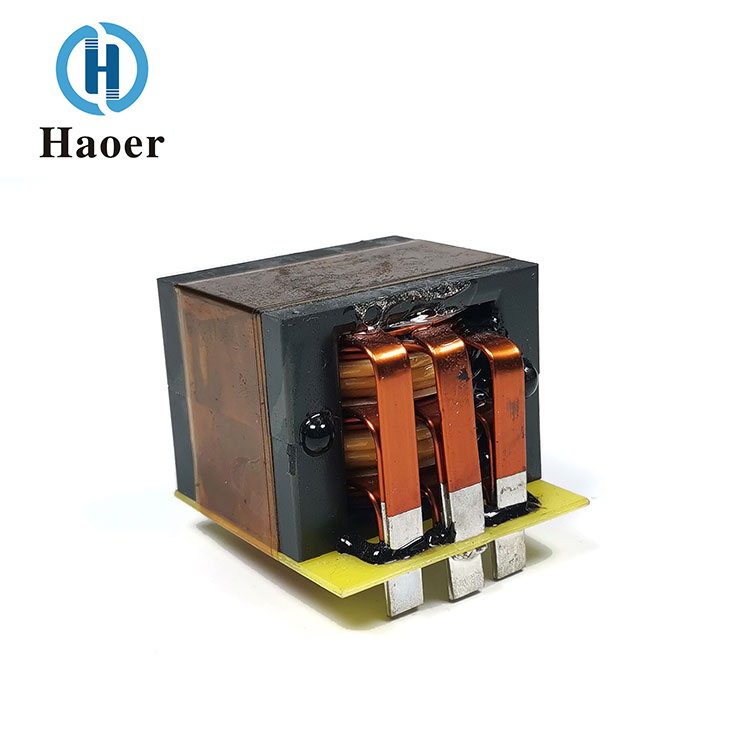
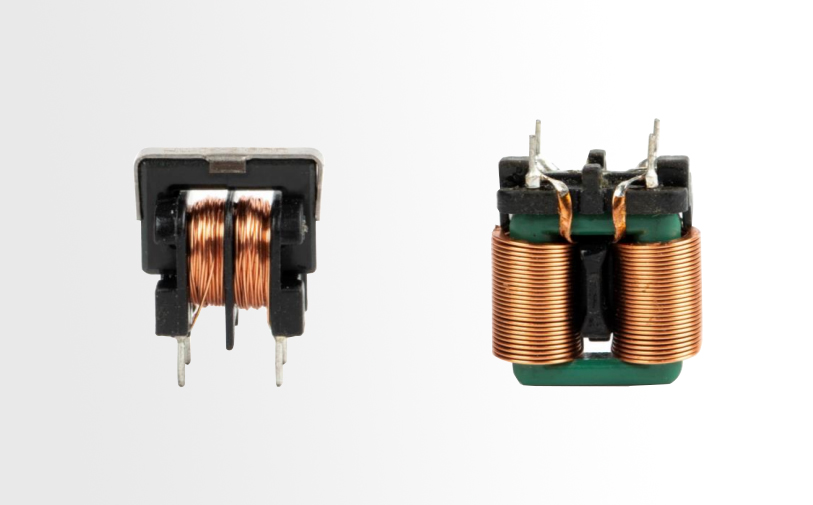
A common mode choke has a relatively simple structure: two windings with opposite directions and the same number of turns are wound on a closed magnetic core. In essence, it acts as a checkpoint specifically for "bad signals" in the circuit.
1. Common Mode vs. Differential Mode -- Understanding the Filter's Targets
To understand the role of a common mode choke, we first need to distinguish two types of noise in a circuit:
● Differential mode interference -- Exists between the two signal lines (e.g., live and neutral of a power supply). The noise currents flow in opposite directions and are typically caused by internal circuit ripple.
● Common mode interference -- Appears on both lines relative to ground. The noise currents flow in the same direction and are usually caused by external electromagnetic radiation or grounding loop issues.
If we compare a circuit to a highway, differential mode interference is like a car driving the wrong way -- relatively easy to handle. Common mode interference, however, is like the entire road vibrating -- it is more destructive.
The magic lies in magnetic flux cancellation and reinforcement.
1. Transparent to desired signals (differential mode current): When normal current flows through the two windings (one in, one out), the magnetic fluxes generated in the core are opposite and cancel each other. Thus, the choke presents very low impedance to normal signals, which pass through with little attenuation.
2. Strongly blocks interference (common mode current): When common mode noise appears, the currents in both windings flow in the same direction, producing fluxes that also flow in the same direction. The fluxes add, causing the inductance to rise dramatically. The choke then presents very high impedance to the noise, effectively absorbing or blocking it.
In today's digital era, from USB communication and HDMI high‑definition transmission to CAN bus automotive electronics, common mode chokes are essential wherever high‑speed signals are involved. Their specific roles include:
1. Improving signal quality -- In interfaces such as USB, Type‑C, and HDMI, they effectively filter out high‑frequency common mode noise, ensuring data integrity and reducing error rates.
2. Suppressing EMC radiation -- Helping products pass EMC (electromagnetic compatibility) tests. Many products fail radiated emission tests during certification, and adding a suitable common mode choke often solves the problem.
3. Protecting circuits -- Preventing external electrostatic discharge or high‑frequency noise from entering the equipment and damaging chips or causing system crashes.
Guangdong Haoer Electronics Co., Ltd. not only provides standard inductor components but is also committed to offering complete EMC solutions. If you are facing issues with equipment interference, insufficient filtering, or space constraints, please contact us for custom samples and technical support.
-