Language


The selection of common-mode inductors requires careful evaluation of several interrelated electrical and thermal parameters—including rated current, impedance characteristics, operating frequency range, thermal performance, winding configuration, and manufacturing consistency—to ensure effective common-mode noise suppression and long-term reliability in the target application.
1. Rated Current and Thermal Design
Once the PCB layout and system power requirements are finalized, the maximum continuous input current is typically fixed. The inductor’s current rating must exceed this value to prevent saturation and excessive temperature rise. Conductor cross-sectional area is commonly sized using a current density guideline of 4 A/mm² (equivalent to 400 A/cm²), though this value may be adjusted based on allowable temperature rise, ambient conditions, and thermal management provisions (e.g., heatsinking or airflow). Single-strand wire is generally preferred for cost efficiency and predictable high-frequency behavior; while skin effect increases AC resistance at higher frequencies, this inherent loss can contribute beneficially to broadband common-mode attenuation without compromising structural simplicity.
2. Impedance–Frequency Characteristics and Application-Specific Matching
Common-mode impedance is inherently frequency-dependent. Therefore, the inductor’s impedance profile—particularly its magnitude and phase response across the relevant noise spectrum (e.g., 100 kHz–100 MHz)—must align closely with the system’s EMI requirements. Selecting an inductor whose specified common-mode impedance curve matches the dominant interference frequencies yields optimal filtering performance. Empirical validation via prototype-level testing is essential, as minor process variations (e.g., core material tolerances, winding tension, or layer alignment) can significantly affect parasitic parameters—including common-mode inductance, differential-mode inductance, and inter-winding capacitance—thereby influencing both insertion loss and resonance behavior.
3. Winding Configuration and Parasitic Considerations
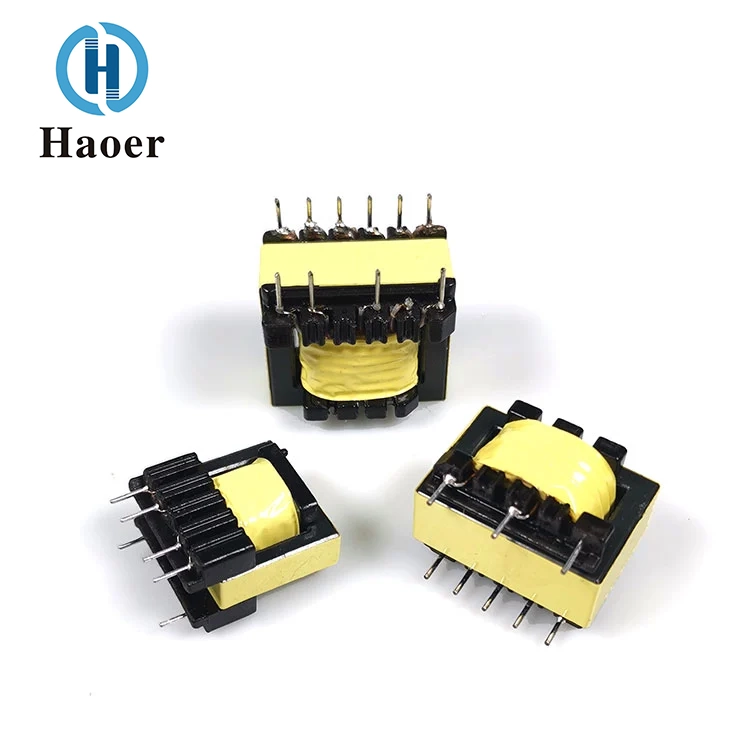
Standard common-mode inductors employ bifilar or symmetrical single-layer windings, with each winding placed at opposite ends of the magnetic core and electrically isolated. This arrangement maximizes coupling between windings, minimizes differential-mode inductance, and ensures balanced impedance for common-mode currents. In contrast, double-layer or stacked winding configurations—though occasionally used to accommodate space constraints—introduce higher inter-turn and inter-winding capacitance, which lowers the self-resonant frequency and degrades high-frequency attenuation. Moreover, asymmetry in winding geometry or placement results in unequal inductances between the two legs, thereby converting part of the common-mode signal into an unwanted differential-mode component and reducing overall filter effectiveness.