Language


The core material determines the frequency characteristics, saturation behavior, and cost of the inductor.
MnZn ferrite: High permeability, provides high impedance at low frequencies (tens of kHz to a few MHz), suitable for common-mode filtering at the power input. However, its high-frequency performance is relatively limited.
NiZn ferrite: Lower initial permeability, but maintains stable permeability at very high frequencies. Suitable for high-frequency signal lines or applications requiring suppression of high-frequency interference.
Sendust / High-flux powder cores: High saturation flux density, not easily saturated. Suitable for power applications that demand high current and high power density.
Amorphous / Nanocrystalline cores: Extremely high permeability and excellent temperature stability. Often used in high-end industrial or automotive power supplies where performance and reliability are critical.
Different shapes offer trade-offs in magnetic circuit, heat dissipation, cost, and suitability for automated production.
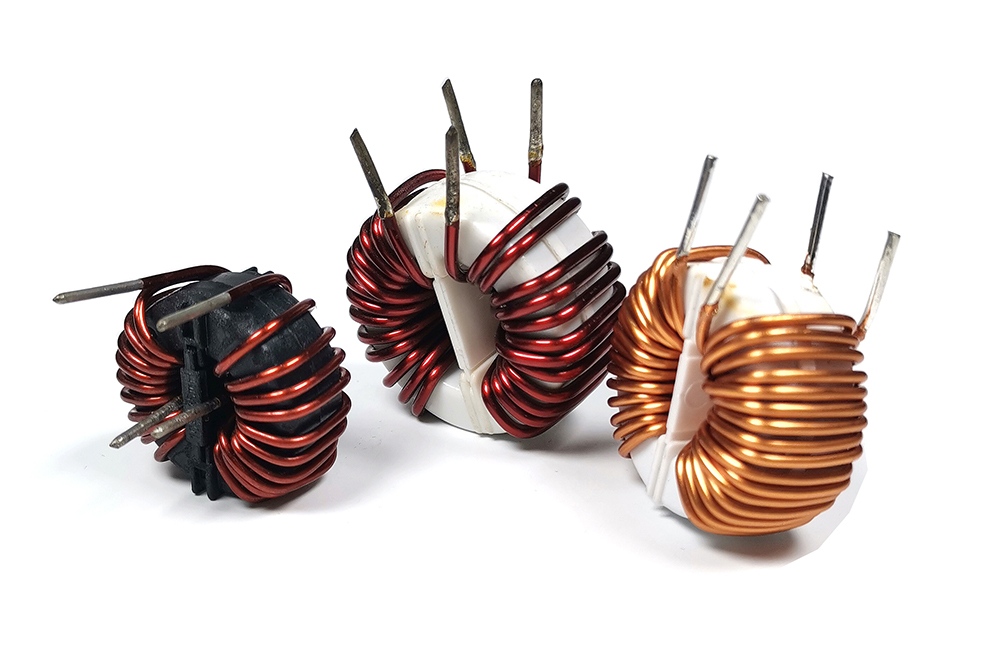
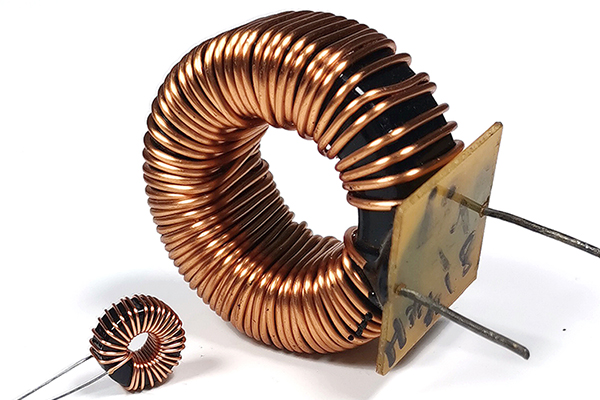
Toroidal (ring) core: Fully closed magnetic circuit, very low leakage flux, good EMI characteristics. However, winding is more complex and cost is higher. Suitable for high-frequency and high-precision applications.
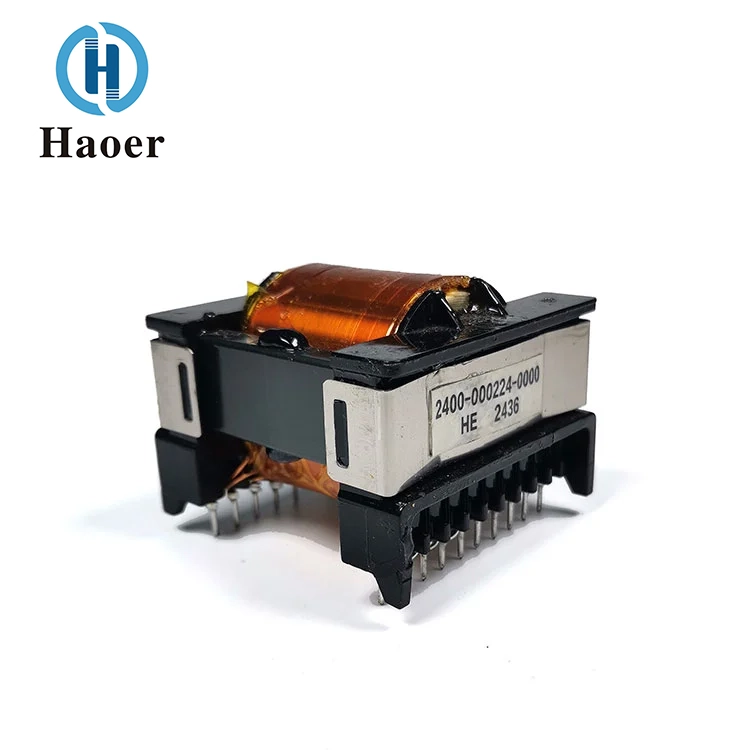
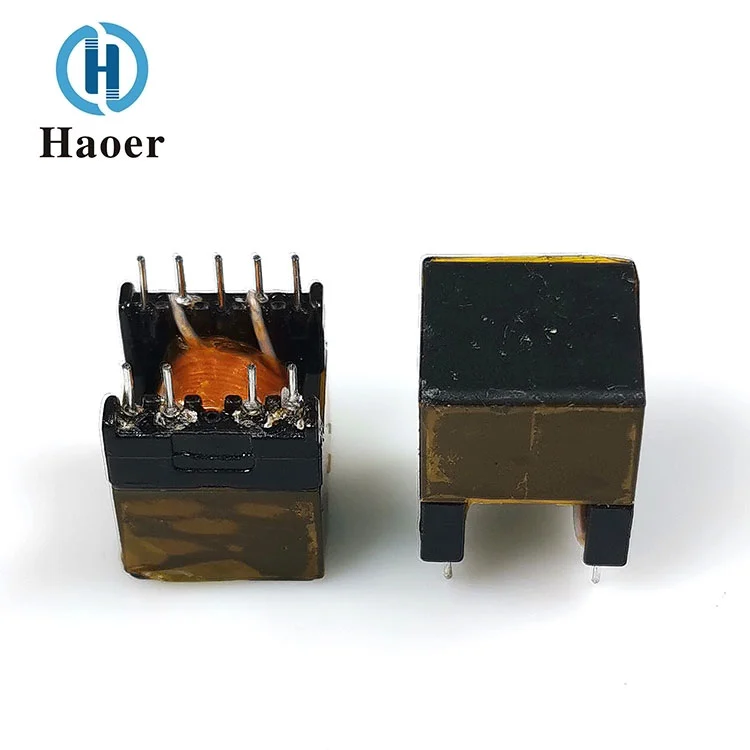
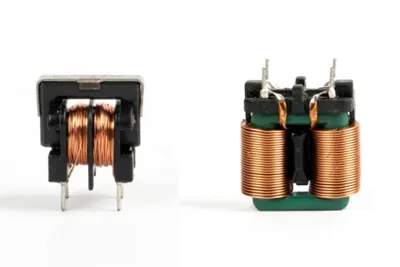
UU / ET / EE types: Two-piece core structure with an open magnetic circuit, good heat dissipation. Among them, the EE type has a higher degree of magnetic closure, a compact structure, and is suitable for automated production. The UU type is easier for through-hole assembly. These types are suitable for power filtering applications that require good heat dissipation or automated insertion.
SMD (surface-mount) type: Small size, suitable for high-density surface mounting. Mainly used in compact portable devices and high-frequency circuits.
Flat-wire type: Wound with flat copper strip, which effectively reduces DC resistance (DCR) and temperature rise, improving efficiency. Suitable for high-current applications where heat dissipation and space are critical.