Language


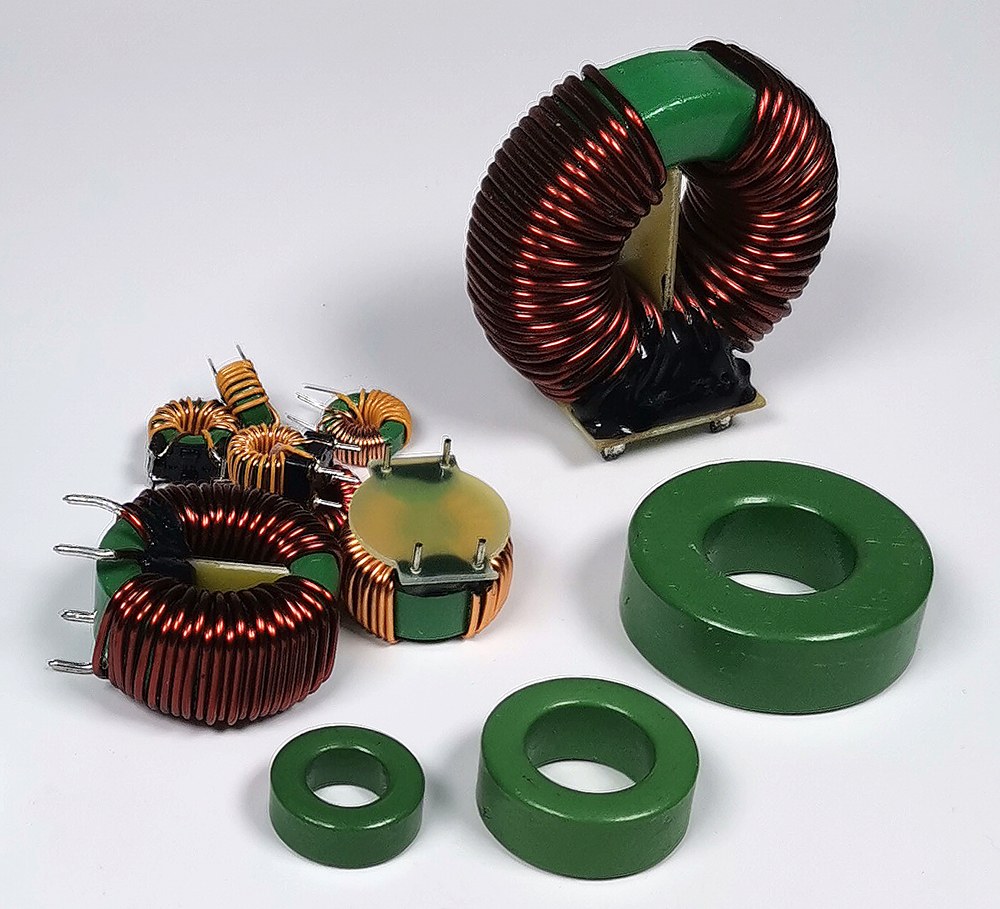
At Guangdong Haoer Electronics Co., Ltd. and Foshan Pin'er Electronics Co., Ltd., a frequently raised technical inquiry concerns the significance of core material selection in toroidal transformers. The answer is unequivocally affirmative: core material exerts a decisive influence on transformer performance. As the central functional component, the magnetic core governs four critical performance parameters---energy efficiency, thermal behavior, power delivery capability, and operational reliability. Below is a technically grounded analysis of these interrelated factors.
Magnetic permeability quantifies a material's ability to support the formation of magnetic flux under an applied magnetic field. Materials exhibiting higher permeability enable more effective flux linkage between windings, thereby enhancing power transfer efficiency for a given input. For instance, high-purity, grain-oriented silicon steel demonstrates superior permeability. Toroidal transformers incorporating such cores generate stronger and more uniform magnetic fields, resulting in improved secondary voltage and current output---and consequently, higher rated power. In contrast, low-permeability materials (e.g., standard-grade ferrites or impure iron alloys) exhibit diminished flux-conducting capability, leading to suboptimal power conversion and reduced output capacity.
Core losses comprise hysteresis loss and eddy-current loss---both intrinsic to alternating magnetic excitation. High-grade silicon steel features tightly controlled metallurgical composition and laminated geometry, yielding exceptionally low total core loss. This ensures maximal energy transfer to the secondary winding while minimizing resistive heating within the core. Conversely, inferior core materials incur elevated losses, directly compromising efficiency and accelerating thermal degradation. Elevated operating temperatures not only diminish short-term performance but also accelerate insulation aging and reduce service life. Thus, selecting a low-loss core material simultaneously enhances efficiency and long-term reliability.
Saturation flux density (Bₛₐₜ) defines the upper limit of magnetic flux density a material can sustain before permeability collapses and the core enters nonlinear, non-ideal operation. Materials with high Bₛₐₜ---such as specialized cobalt-iron or nanocrystalline alloys---permit greater peak current handling without saturation, enabling stable high-power operation across dynamic load conditions. Premature saturation results in waveform distortion, increased harmonic content, abrupt output voltage collapse, and potential system instability---undesirable outcomes in mission-critical applications. Accordingly, for high-current or high-dynamic-range applications, core materials with elevated Bₛₐₜ are rigorously specified.
Although minimized through low-loss design, residual heat generation remains inevitable. A core material with favorable thermal conductivity facilitates efficient lateral and axial heat conduction away from hotspots---particularly at the interface between core and windings. Certain silicon steel variants, enhanced with controlled metallic additives (e.g., aluminum or nickel), demonstrate markedly improved thermal diffusivity. Enhanced thermal management sustains lower steady-state operating temperatures, thereby preserving dielectric integrity, stabilizing electrical parameters, and supporting sustained high-power output over extended duty cycles. Robust thermal performance is therefore integral to achieving design lifetime and field reliability.
Core material selection constitutes not merely a component-level engineering consideration, but the foundational determinant of toroidal transformer functionality, efficiency, and longevity. At Guangdong Haoer Electronics Co., Ltd. and Foshan Pin'er Electronics Co., Ltd., we adopt a performance-driven, application-specific approach to core specification---tailoring material choice (e.g., premium grain-oriented silicon steel, amorphous alloys, or nanocrystalline composites) to meet precise requirements in efficiency optimization, power density maximization, or thermal resilience under elevated ambient conditions. Our commitment to material excellence ensures that every toroidal transformer delivers consistent, reliable, and high-fidelity power conversion---under real-world operational demands.