Language


Induction heating systems are widely used in modern manufacturing for metal hardening, forging, melting, and precision heating. At the core of these systems lies a component that is often underestimated but absolutely essential—the induction heating equipment capacitor. This article explores its function, working principles, selection criteria, common failures, and maintenance strategies. It is designed to help engineers, procurement specialists, and equipment users understand how capacitors influence system efficiency, stability, and lifespan. By the end, readers will gain a complete technical and practical understanding of how to optimize induction heating performance through proper capacitor management.
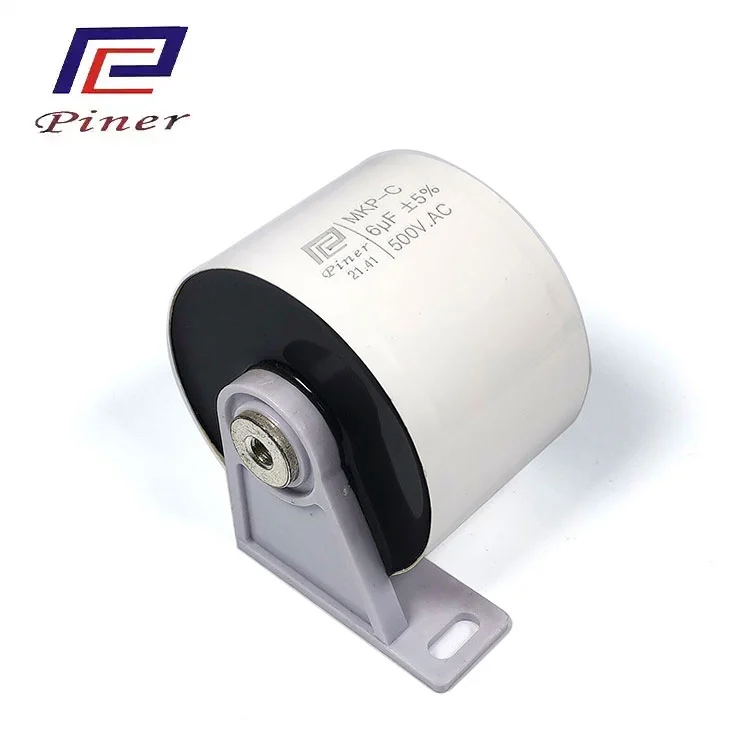
Induction heating technology relies on electromagnetic fields to generate heat directly inside conductive materials. Unlike traditional heating methods, it offers high efficiency, rapid heating speed, and precise control. However, the performance of the entire system depends heavily on the resonant circuit, where the induction heating equipment capacitor plays a central role.
In practical systems, capacitors are responsible for forming LC resonance circuits with induction coils. This resonance determines frequency stability, power output efficiency, and energy transfer effectiveness. Without a properly designed capacitor system, even the most advanced induction power supply cannot operate efficiently.
The induction heating equipment capacitor is not just an auxiliary component; it is a core energy-shaping device. It stores and releases electrical energy at high frequency, enabling resonance between the power supply and the induction coil.
In industrial environments, where continuous operation is required, even small capacitor inefficiencies can lead to overheating, unstable heating patterns, or system shutdowns.
The working principle is based on resonance in an LC circuit. When alternating current flows through the system, the capacitor alternately stores and releases energy, synchronizing with the induction coil’s magnetic field.
This process can be summarized as follows:
This continuous energy exchange forms a stable oscillation system. If the capacitor value drifts or degrades, resonance shifts and system efficiency drops significantly.
Understanding capacitor specifications is critical for ensuring system compatibility and performance stability. Below are the most important parameters:
| Parameter | Description | Impact on System |
|---|---|---|
| Capacitance (μF) | Electrical storage capacity | Determines resonance frequency and heating speed |
| Rated Voltage | Maximum safe operating voltage | Prevents breakdown and system failure |
| Frequency Range | Operating frequency compatibility | Affects system tuning and efficiency |
| ESR (Equivalent Series Resistance) | Internal resistance of capacitor | Influences heat generation and energy loss |
| Thermal Stability | Performance under high temperature | Ensures reliability in industrial environments |
In real-world industrial use, induction heating capacitors face several challenges that directly affect productivity and maintenance costs.
These issues often lead to unexpected downtime in production lines, increasing operational costs and reducing output efficiency.
Selecting the correct induction heating equipment capacitor requires balancing electrical, thermal, and mechanical requirements. Below are essential selection guidelines:
A mismatch in capacitor selection can lead to reduced heating efficiency or even catastrophic system failure.
Different capacitor technologies are used in industrial induction heating systems. Each type has its strengths and limitations.
| Type | Advantages | Disadvantages | Best Application |
|---|---|---|---|
| Polypropylene Film Capacitors | High stability, low loss | Larger size | Medium and high-frequency systems |
| Mica Capacitors | Excellent high-frequency performance | Higher cost | Precision heating systems |
| Ceramic Capacitors | Compact size, high voltage resistance | Brittle structure | Small-scale induction devices |
| Water-cooled Capacitor Banks | Excellent heat dissipation | Complex installation | High-power industrial furnaces |
Proper maintenance significantly extends capacitor lifespan and ensures stable system operation.
Troubleshooting common issues often involves checking ESR values, capacitance drift, and physical damage signs. Early detection helps prevent costly downtime.
Induction heating capacitors are widely used across industries where precise and efficient heating is required.
In each application, capacitor performance directly influences heating uniformity, energy consumption, and production quality.
As industrial automation and high-frequency power electronics continue to evolve, induction heating capacitors are also undergoing technological advancements.
These innovations aim to improve efficiency, reduce downtime, and enhance predictive maintenance capabilities in industrial systems.
The induction heating equipment capacitor is a foundational component that determines the performance, stability, and efficiency of modern induction heating systems. From resonance control to energy optimization, its role is both technical and strategic. Understanding its behavior and selecting the right type can significantly improve industrial productivity and reduce maintenance risks.
In practice, investing in high-quality capacitors and implementing proper maintenance strategies is not optional—it is essential for long-term operational success.
As a professional manufacturer in the field of industrial electronic components, Guangdong Haoer Electronics Co., Ltd. specializes in high-performance induction heating capacitors designed for demanding industrial environments. Our products are engineered for stability, efficiency, and long service life, meeting the needs of global manufacturing industries.
We provide customized capacitor solutions for different power levels and operating frequencies, ensuring optimal performance for your induction heating systems.
If you are looking for reliable capacitor solutions or technical consultation, feel free to contact us for more detailed product information, technical support, and partnership opportunities. Our engineering team is ready to support your industrial applications with professional solutions tailored to your needs.