Language


In the field of electronic technology, transformers, as the core components for electrical energy conversion and signal transmission, their performance characteristics directly determine the efficiency and reliability of circuit systems. Based on the working frequency characteristics, transformers can be classified into two major types: high-frequency and low-frequency. These two types exhibit significant differences in material selection, structural design, and engineering application, which have a profound impact on the performance optimization and system integration of modern electronic devices.
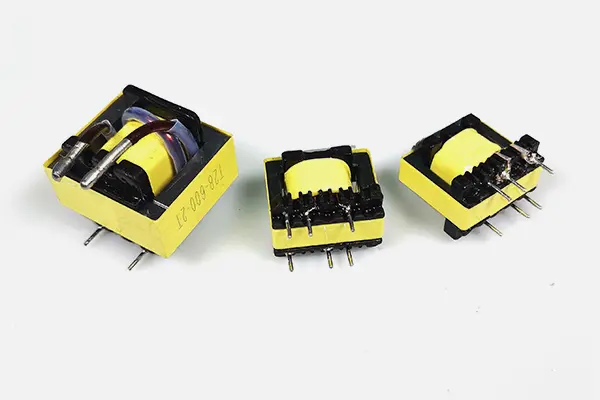
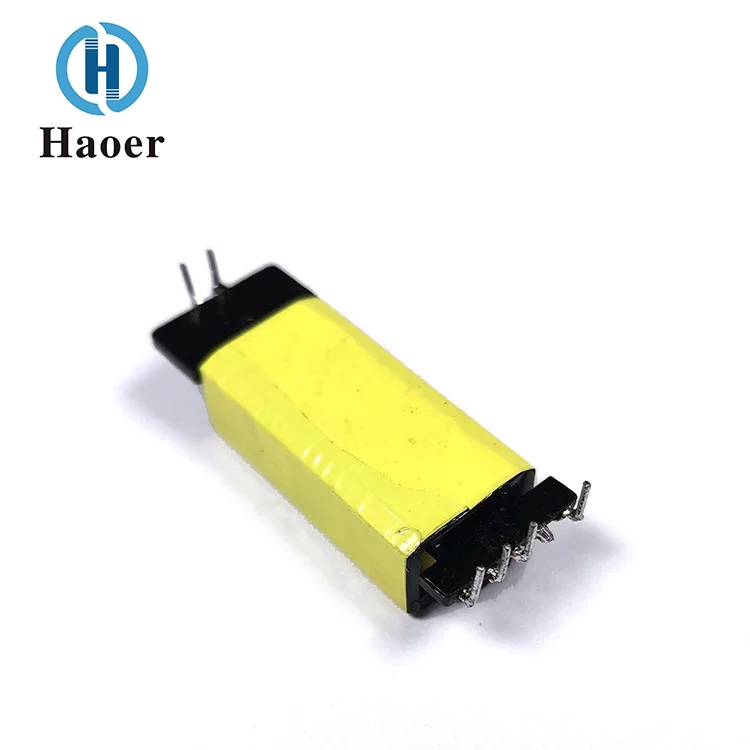
The operating frequency band of high-frequency transformers typically spans from kilohertz to megahertz, and the selection of their magnetic core materials follows the principle of minimizing high-frequency losses. Ferrite materials, with their unique spinel crystal structure, exhibit excellent magnetic permeability and low eddy current losses under high-frequency conditions, making them the preferred material for high-frequency transformers. Further optimized amorphous alloy magnetic cores, by breaking the long-range ordered arrangement of atoms, reduce the hysteresis loss to less than one-tenth of that of traditional materials, and are particularly suitable for GHz-level ultra-high frequency applications. The combination of the soft magnetic properties and high-frequency response capabilities of these materials enables high-frequency transformers to achieve breakthrough applications in switching power supplies, radio frequency circuits, and other fields.
Low-frequency transformers remain within the range of power frequency (50/60Hz), and their magnetic core materials have evolved with silicon steel sheet technology as the core. The (110) grain-oriented silicon steel sheets formed through cold rolling process can achieve magnetic permeability close to the theoretical limit under power frequency conditions. The laminated structure effectively blocks the eddy current path, maintaining the core loss at the industrial level of 0.5-2.0W/kg. Although the loss increases exponentially in the high-frequency range, it still maintains an irreplaceable position in the field of large power transformers, with a single unit capacity reaching MVA level.
The volume advantage of high-frequency transformers stems from the frequency effect of Faraday's electromagnetic induction law. When the operating frequency increases, the cross-sectional area of the magnetic core required to maintain the same magnetic flux density decreases inversely proportional to the number of coil turns. Experimental data shows that when the frequency is increased from 50Hz to 100kHz, the volume of the transformer can be reduced to 1/200 of the original. This characteristic is particularly crucial in portable devices, such as the high-frequency transformers in mobile phone chargers, whose volume is only 5% of the low-frequency transformers of the same power. In terms of efficiency, high-frequency transformers can achieve a conversion efficiency of over 90% under typical load conditions by optimizing the ratio of magnetic core loss and copper loss. Compared to traditional low-frequency transformers, this efficiency is improved by 10-15 percentage points.
The volume characteristics of low-frequency transformers are closely related to their application scenarios. In the field of power transmission, large oil-immersed transformers with single-phase capacity of up to 800 MVA have a core diameter of over 3 meters. This volume scale is the basis for maintaining the stable operation of the power grid. In terms of efficiency, although the full-load efficiency can reach over 98%, in partial load conditions, the proportion of no-load loss significantly increases, resulting in a comprehensive efficiency of only 85%, highlighting the challenge of load adaptability design.
The application landscape of high-frequency transformers exhibits diversified characteristics: In the field of switching power supplies, their high-frequency feature significantly reduces the volume and weight of the power supply, promoting the development of notebook computer adapters towards lightness and thinness; in communication base stations, pulse transformers achieve high-speed isolation transmission of digital signals; in the field of electromagnetic heating, the efficiency of high-frequency induction heating power exceeds 95%, revolutionizing the traditional resistance heating mode. Particularly noteworthy is the field of electric vehicle charging stations, where the collaborative application of high-frequency transformers and silicon carbide components enables the power density of the charging module to exceed 50W/in³.
Low-frequency transformers form a solid foundation in the energy infrastructure: In the smart grid, distribution transformers, as the key node in the "last ten kilometers", perform dual functions of voltage transformation and power quality control; in the rail transportation field, 25kV/1500V traction transformers, through special structural design, meet the thermal stability requirements under large current impacts; in the new energy grid connection system, low-frequency transformers achieve flexible connections between photovoltaic inverters and the grid, and their anti-saturation capability ensures stable operation under weak grid conditions.
The electromagnetic compatibility issues caused by high-frequency transformers have a dual nature: their operating frequency band (below 30 MHz) coincides with the sensitive frequency band of electronic devices, resulting in a significant risk of radiation interference. Through three-dimensional electromagnetic simulation to optimize the magnetic core structure, the stray capacitance can be reduced by 60%; using nano-crystalline magnetic shielding layer technology, the leakage flux density can be controlled below 0.5 mT. At the receiving end, the EMI filtering network composed of common-mode inductors and X capacitors can achieve an interference suppression effect of more than 30 dB for conducted interference.
The electromagnetic compatibility issues of low-frequency transformers are mainly manifested as conducted interference: The power frequency magnetic field (50/60Hz) may affect precision instruments through magnetic coupling. Using a polomy alloy shielding罩 can reduce the magnetic field to the level of the Earth's magnetic field. In medical equipment applications, through a double-winding balanced design, the leakage inductance of the transformer can be less than 1μH, effectively suppressing the power frequency common-mode interference. It is worth noting that the nonlinear loads in the smart grid lead to an increase in harmonic losses of low-frequency transformers, prompting the development of magnetic core materials towards nanocrystalline alloys.
Technological evolution and system integration trends
High-frequency transformers are evolving towards higher power density and wider operating temperature ranges. The integration of gallium nitride devices with planar transformer technology has enabled the power density of switching power modules to exceed 100W/cm³. In the field of electric vehicles, the 800V platform charging system requires transformers to have insulation strength of over 10kV, driving the breakthrough of membrane capacitor composite insulation technology.
In the low-frequency transformer field, the focus is on the demands of the smart grid. By installing optical current sensors and intelligent temperature control units, real-time monitoring of the transformer's status is achieved. In the scenario of new energy integration, a multi-winding split transformer design is adopted, which can simultaneously accommodate the multi-source integration requirements of photovoltaic, energy storage, and charging piles, enhancing the flexibility of the distribution network.
This differentiated technological approach essentially reflects the inevitable trend of power electronics technology moving towards higher frequencies and greater intelligence. High-frequency transformers and low-frequency transformers are not simply substitutes but rather complementary solutions formed at different temporal and spatial scales. In the future, with the widespread adoption of wide bandgap devices and the integration of artificial intelligence algorithms, transformer technology will give rise to more innovative applications in the intersection of electromagnetic energy conversion and information processing.