Language


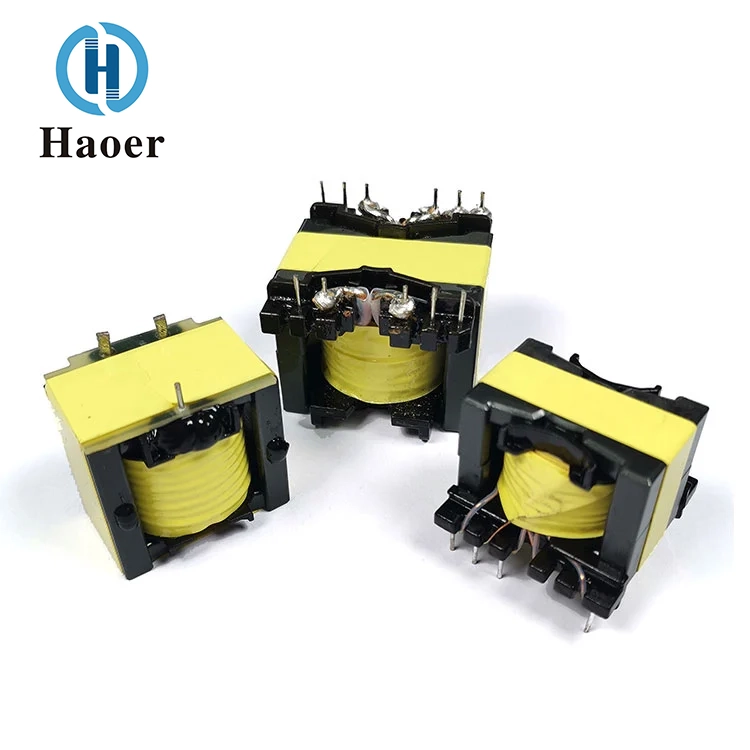
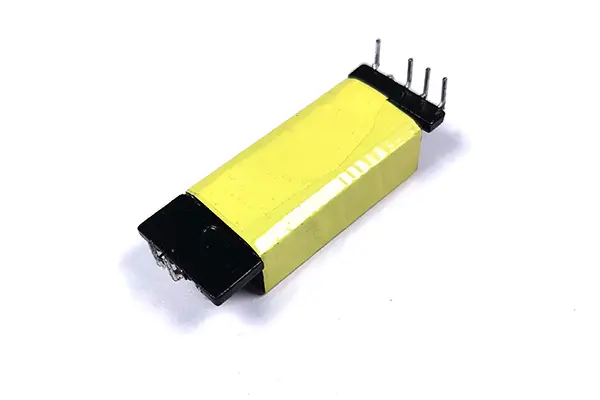
High-frequency transformers are components that convert alternating voltage, current and characteristic impedance. When an alternating current flows through the primary coil, an alternating magnetic flux is generated in the iron core (or magnetic core), thereby inducing a working voltage (or current) in the secondary coil.
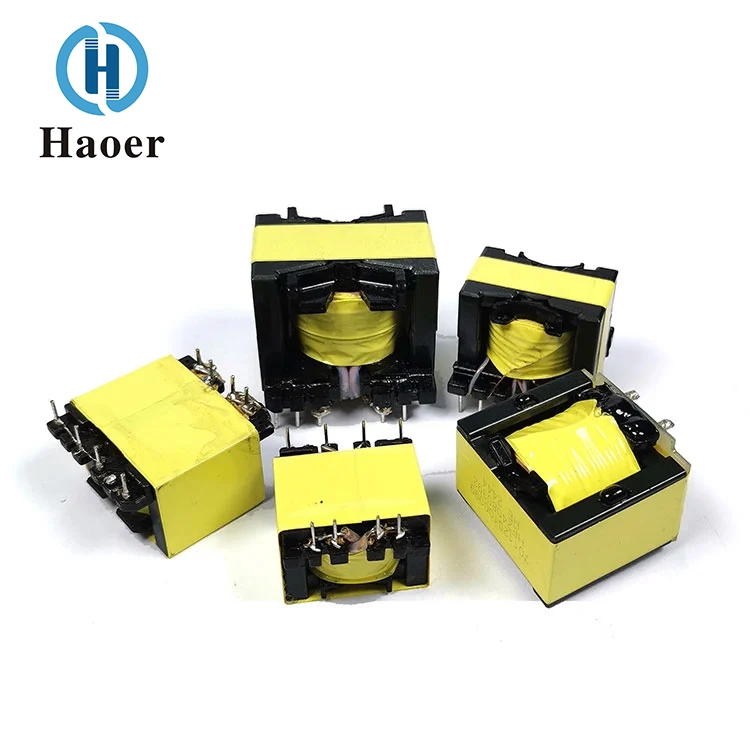
The high-frequency transformer is composed of a transformer core (or magnetic core) and an electromagnetic coil. The electromagnetic coil has two or more windings. The winding inserted into the coil is called the primary winding, and the other windings are called secondary windings. The magnetic core of the transformer includes cylindrical magnetic core, RM type magnetic core, E type magnetic core, EC, ETD and EER type magnetic cores, EP type magnetic core, ring-shaped magnetic core, PQ type magnetic core, etc. What impact do these magnetic cores have on the operation of the transformer? The following can provide a detailed analysis.
The frame and windings are basically encapsulated by the magnetic core, resulting in excellent actual shielding effect against EMI; the specifications of can-type magnetic cores all comply with IEC standards, and they have good interchangeability during production; it can provide simple frame type (without pin insertion) and PCB board installation frame type (with pin insertion); due to the design of the can shape, it costs more compared to magnetic cores of the same specification of other types; because of its shape, it is not conducive to heat pipe heat dissipation, so it is not suitable for use in power transformers and inductors with high power.
Compared with the cylindrical type, the two symmetrical sides of the cylindrical type have been removed. This design is more beneficial for heat pipe cooling and for large-sized wires to be found; compared with the cylindrical type, it saves approximately 40% of the installation space; the frame can be either needle-shaped or pin-insert type; it can be installed with a pair of iron clips; the RM type magnetic core can be made into a flat shape (suitable for current planar transformers or directly assembling the magnetic core onto the circuit board power supply circuit that has already been designed with windings); although the shielding effect is not as good as that of the cylindrical type, it is still useful.
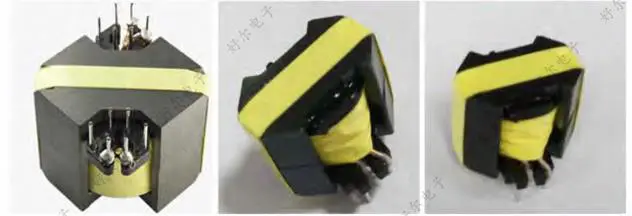
This type of magnetic core has a structure that is close to that of the E-type and the can-type. Like the E-type magnetic core, they provide sufficient space for large cross-sectional conductors to fit (suitable for the current trend of low-voltage high-current in switching power supplies); this shape of magnetic core also has good heat dissipation through the heat pipe; since the center column is cylindrical, compared with the rectangular one with the same cross-section, the length of a single-turn winding is reduced by 11%, which results in a 11% reduction in copper loss, and also enables the magnetic core to provide a higher power; moreover, the center column being cylindrical also prevents the safety hazard of damaging the insulation of the winding cable during winding due to the sharp corners of the rectangular center column.
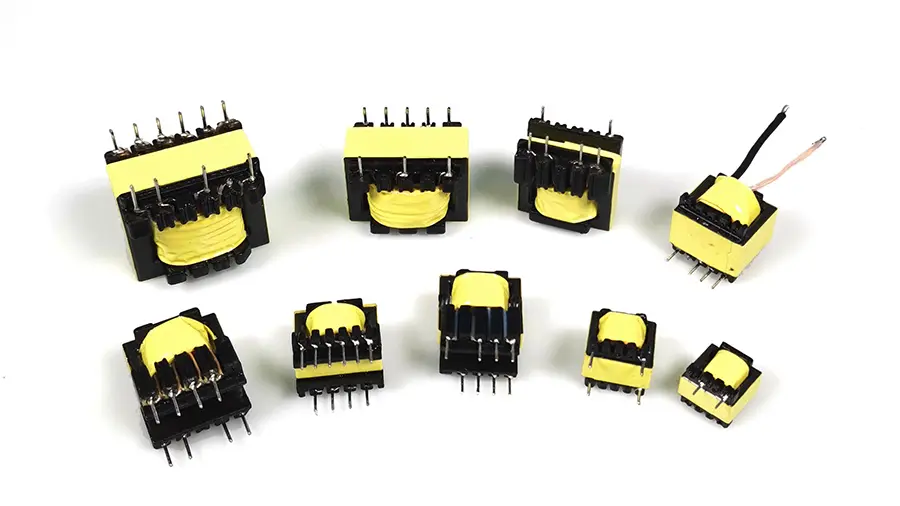
The cost of E-type magnetic cores is much lower. The winding and assembly process is very simple. This type of magnetic core is currently the most widely used in shape. However, its drawback is that it cannot provide its own shielding. E-type magnetic cores can be installed in different directions and can be used in series to achieve a larger output power. These magnetic cores can be made in a flat shape (which is a very popular magnetic core shape for planar transformers nowadays); they can also provide pinless and pin-type frames; because of its excellent heat pipe cooling and the ability to be used in series, most high-power inductors and transformers use this type of magnetic core.
The ring-shaped central column of the EP type magnetic core has a three-dimensional structure. Apart from the tail end that touches the PCB board, the winding is completely enclosed, resulting in excellent shielding. This unique shape minimizes the influence of the air gap generated on the surface during the assembly of the two magnetic cores, and provides a larger volume and a higher overall space utilization ratio.
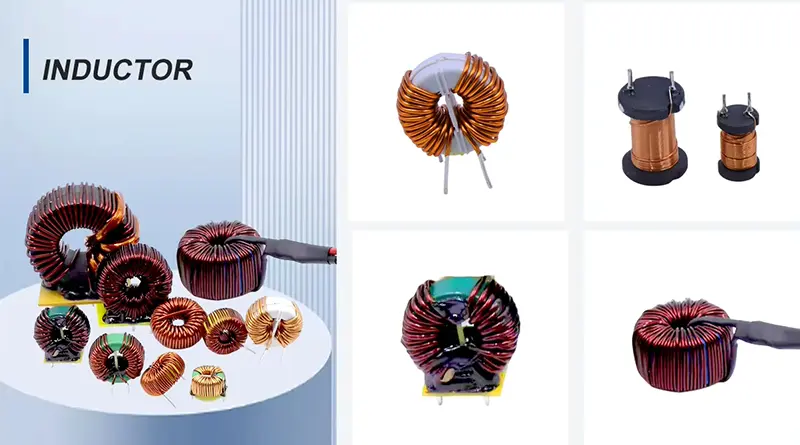
For manufacturers, the ring-shaped magnetic core is the most economical. Among various magnetic cores compared between the two, it has the lowest cost; because of the application of the frame, the additional and assembly costs are zero; when appropriate, it can be wound using a winding machine; its shielding is very good.
The PQ-type magnetic core is specifically designed for inductors and transformers used in switching power supplies. The design of the PQ shape enhances the ratio between the volume, area of the magnetic core and the total area of the winding; such a design makes it possible to provide the largest inductance and the maximum winding area with the least magnetic core; this design enables the maximum output power to be achieved with the smallest transformer volume and net weight, while occupying the least PCB installation space; it can be fixed in place using a pair of iron clamps; this reasonable design also makes the magnetic path cross-section of the magnetic core more uniform, thus this type of magnetic core structure also reduces the number of working hotspots compared to other magnetic cores in the overall design.