Language


In circuit design, inductors and transformers are highly customizable magnetic components. Unlike standard off‑the‑shelf parts, their design must take into account multiple parameters -- inductance, operating frequency, power rating, heat dissipation, space constraints, and electromagnetic compatibility -- as well as manufacturing feasibility, to meet specific customer requirements.
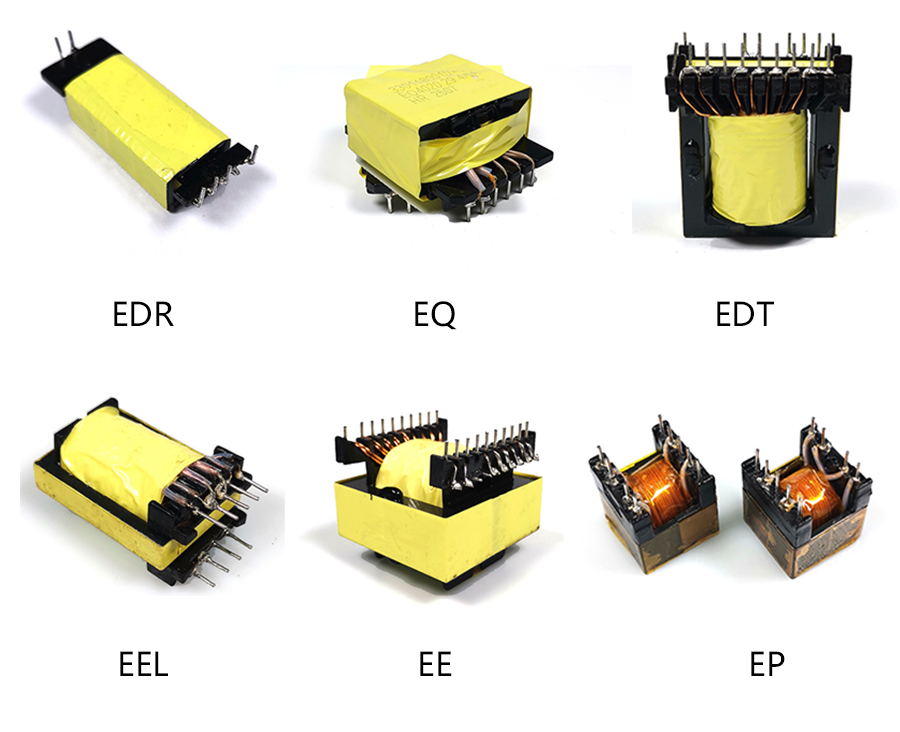
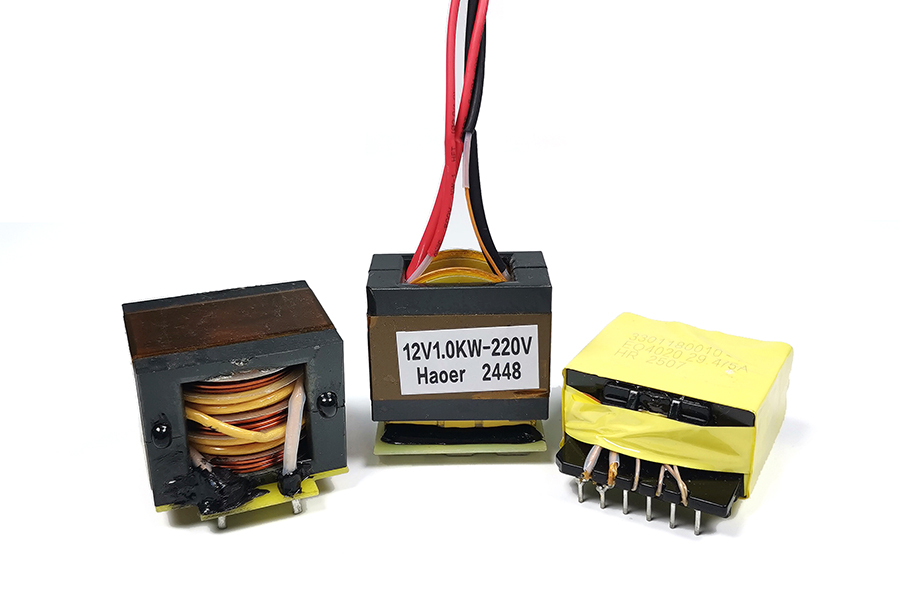
The magnetic core is the heart of any inductor or transformer. Its material and geometry directly determine the component's performance. Below we introduce the key features and typical applications of the most common core shapes, based on our experience at Guangdong Haoer Electronics Co., Ltd. and Foshan Pin'er Electronics Co., Ltd.
1. E Core
Features: Ample lead space, easy winding and connection; wide frequency and voltage range, high output power, good thermal stability.
Applications: Program-controlled switch power supplies, LCD display power supplies, high‑power UPS inverters, computer power supplies, energy‑saving lamps.
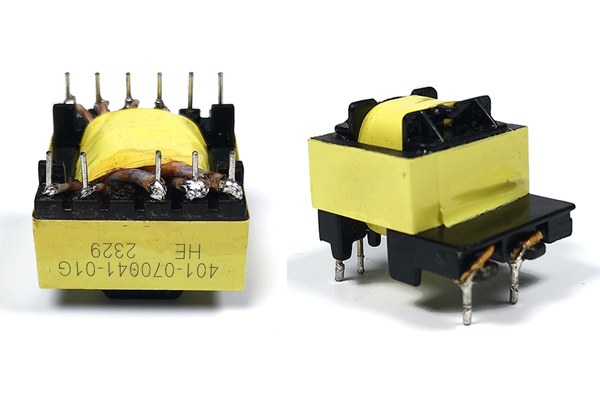
2. Planar E Core
Features: Compact size, suitable for high frequencies; air gap at the top of the coil for tight coupling and low loss. Loss decreases with temperature rise, helping to prevent overheating.
Applications: Power conversion transformers and chokes, DVD power supplies, camera flashes, communication equipment, and other small electronic devices.
3. EC Core
Features: Good magnetic shielding, low distributed capacitance, low transmission loss, high inductance, low leakage inductance, uniform magnetic field. The bobbin has multiple pins for easy multi‑output transformer design.
Applications: Broadband transformers, inductors, isolation transformers, matching transformers -- widely used in program‑controlled switch terminals and precision electronic equipment.
4. EQ Core
Features: Also offers excellent shielding, low distributed capacitance, high inductance, and a uniform field, suitable for multi‑output designs.
Applications: Broadband transformers, inductors, isolation transformers, switching power supply transformers, electronic ballasts.
5. ER Core
Features: Optimized coupling position; round center leg makes winding easy and provides more winding area, allowing for high‑power, low‑leakage transformers.
Applications: Switching power supply transformers, pulse transformers, electronic ballasts.
6. ETD Core
Features: Round center leg for easy winding and large window area; good balance of high power and low leakage. Also performs well in assembly cost, safety compliance, EMI shielding, and standardization.
Applications: Switching power supplies, transmission transformers, electronic ballasts -- used in home appliances, telecom, lighting, office automation, military, OA equipment, electronic instruments, and aerospace.
7. EP Core
Features: Excellent magnetic shielding, low distributed capacitance, low loss, high inductance, low leakage, uniform field; multi‑pin bobbin supports multi‑output designs.
Applications: Broadband transformers, inductors, isolation transformers, matching transformers -- common in program‑controlled switches and precision electronics.
8. EFD Core
Features: Low thermal resistance, low loss, high power density, wide frequency range; lightweight, rational structure, suitable for surface mounting.
Applications: Transformers with small size but high power requirements -- e.g., precision instruments, module power supplies, computer terminal outputs.
9. U Core
Features: Small impedance deviation, high output current, high inductance, effective suppression of harmonics.
Applications: Common‑mode filtering transformers -- widely used in color TVs, computers, monitors, and other electronic devices.
10. P (Pot) Core
Features: Small size, high impedance, easy winding, good balance between shielding and heat dissipation.
Applications: Carrier filters, high‑sensitivity sensors, high‑efficiency sensors, power conversion transformers.
11. PQ Core
Features: Low loss, low temperature rise, good noise immunity; reasonable shape, covers a wide power range (50W‑1000W), saves mounting space. Multiple pins for easy winding, low assembly cost, easy to meet safety requirements, but harder to standardize.
Applications: Main power transformers, drive transformers, smoothing chokes, auxiliary power transformers -- mainly used in networking, telecom, power supplies, and electrical equipment.
12. PM Core
Features: Low leakage flux, low loss, high power, low distributed capacitance.
Applications: Main transformers, driver transformers -- often used in ultrasonic cleaning, laser equipment, and other high‑power applications.
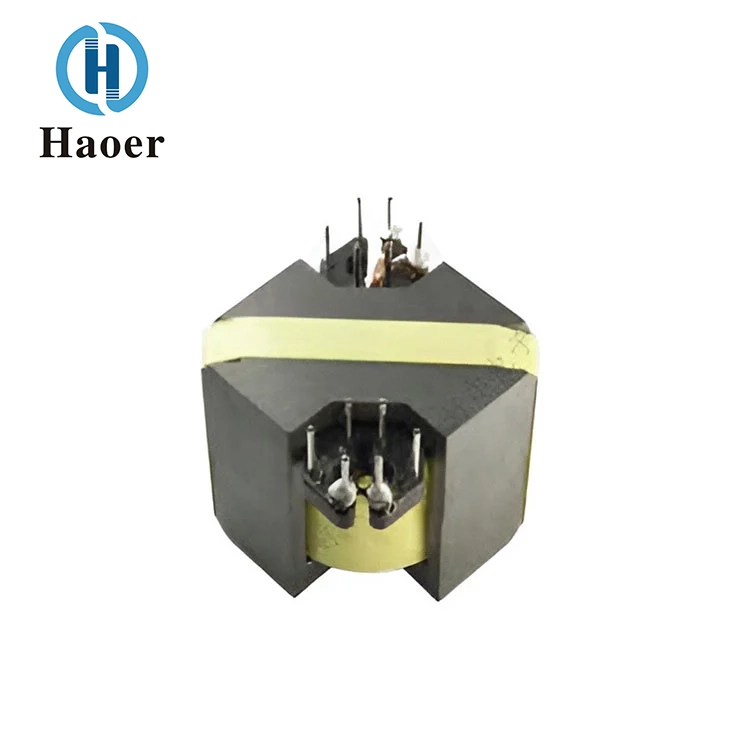
13. RM Core
Features: Excellent shielding, strong anti‑interference, low leakage, low distributed capacitance; multi‑pin bobbin allows multi‑output designs and high‑density mounting. However, heat dissipation is relatively poor and safety compliance costs are higher.
Applications: Auxiliary power transformers, drive transformers, broadband transformers, carrier filters, high‑stability filters -- widely used in carrier communications, networking, digital circuits, TV, and electronic instruments.
Final Note
The above covers the basic features and typical uses of each core shape. In practice, the final choice should also consider operating frequency, power level, cooling conditions, and budget. Our team at Guangdong Haoer Electronics Co., Ltd. and Foshan Pin'er Electronics Co., Ltd. can provide customized core and magnetic component solutions based on your specific application.